
HGV & logistics training
HGV training in Dumfries and Perth
Lorry licences from 7.5 tonne to Class 1, Driver CPC, ADR, lorry loader and forklift training. Every instructor spent years driving for a living before they started teaching.
Licence categories
Which licence do I need?
HGV (heavy goods vehicle) and LGV (large goods vehicle) mean the same thing. Most drivers still use the old Class 1 and Class 2 names.
| Category | Often called | What you can drive | You need first |
|---|---|---|---|
| C1 | 7.5 tonne | Rigid vehicles from 3.5 to 7.5 tonnes, with a trailer up to 750kg | Car licence |
| C1+E | 7.5 tonne and trailer | A C1 vehicle towing a trailer over 750kg, up to 12 tonnes combined | C1 |
| C | Class 2, rigid | Rigid lorries over 3.5 tonnes, with a trailer up to 750kg | Car licence |
| C+E | Class 1, artic | Articulated lorries, and rigid lorries towing a trailer over 750kg | Category C, or Direct Access |
| B+E | Car and trailer | A car towing a trailer up to 3,500kg. No test since 2021, but training is recommended | Car licence |
Starting from scratch? Read our step-by-step HGV licence guide for the medical, theory tests and Driver CPC in the right order.
DVSA
Lorry licence courses
On-road training in dual-controlled vehicles, preparing you for the DVSA practical test. Available at both centres.
-
 C1LGV licences
Class C1 (7.5 tonne)Drive medium goods vehicles between 3.5 and 7.5 tonnes. A common first step into delivery and distribution work.
-
CLGV licences
Category C (rigid vehicle)The full rigid licence for goods vehicles over 3.5 tonnes, from tippers to curtainsiders.
-
C+ELGV licences
Class C+E (articulated)Move up from a rigid licence to articulated and drawbar combinations.
-
DA C+ELGV licences
Direct Access C+EGo straight to the articulated licence without taking the Category C test first.
-
C1+ELGV licences
Class C1+ETow a trailer behind a C1 vehicle, up to 12 tonnes combined.
-
 B+ECar & trailer
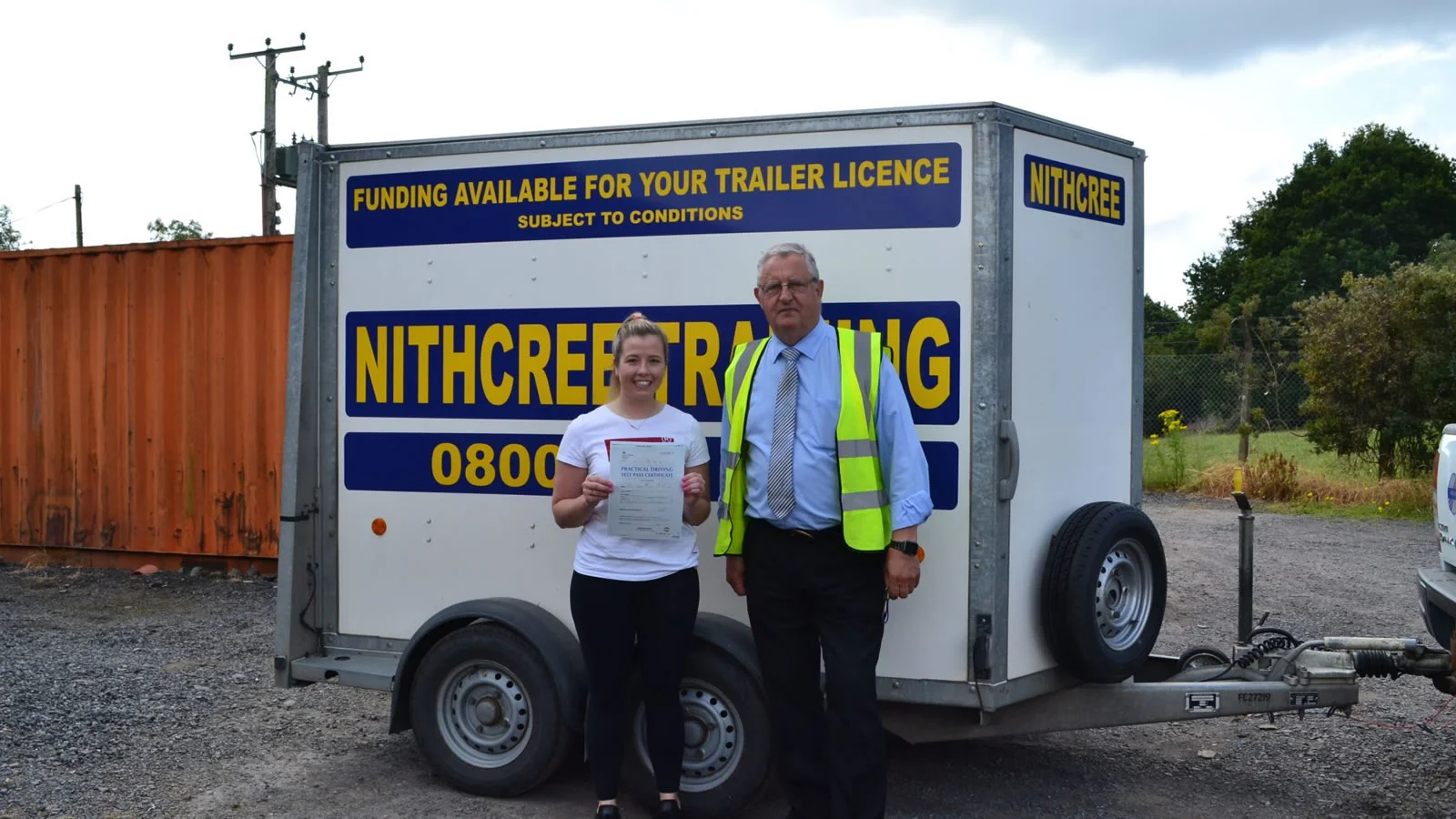
B+E car and trailer familiarisationCar drivers no longer need a separate test to tow. This course teaches you to hitch, tow and reverse a trailer safely.
For working drivers
Driver CPC, ADR and loading courses
Keep your Driver Qualification Card valid, carry dangerous goods, and load and unload safely. Run at our Dumfries centre.
-
 DCPCDriver CPC & ADR
Driver CPC periodic trainingThe 35 hours every professional driver needs every five years to keep their Driver Qualification Card, delivered in 7-hour modules.
-
ADRDriver CPC & ADR
ADR – carriage of dangerous goodsThe certificate drivers need to carry dangerous goods by road, including packages and tankers.
-
 ALLMILoaders & forklifts
Lorry loader (HIAB)Operate a vehicle-mounted crane safely to load and unload at the roadside and on site.
-
RTITBLoaders & forklifts
Counterbalance forklift (RTITB)Warehouse and yard forklift training for complete beginners and experienced operators.
Why Nithcree
Trained by drivers, not just instructors
Nithcree started in a family haulage business and has trained lorry drivers in Dumfries since 2001, and it still shows. Our instructors have driven general haulage, tankers, livestock and wide loads. They teach you the test, and also how the job works once you have passed.
Training runs from our yard at Heathhall in Dumfries and from our Perth centre, so drivers from Dumfries and Galloway, Carlisle and north Cumbria, Perth and Kinross, Dundee and Fife can all train close to home.
- 90% pass rate. Nine in ten candidates who train with us pass. How we do it
- Examiners on the team. Two DVSA reverse examiners and a Driver CPC Module 4 delegated examiner. Meet them
- Dual-controlled vehicles. Learn on the road from your first lesson.
- Career drivers teaching. Every instructor has decades of driving behind them.
- Two centres. Dumfries and Perth.
- Funding checked first. Funding can cover some or all of your course.
Questions
HGV training questions
What is the difference between HGV Class 1 and Class 2?
Class 2 is the old name for Category C: rigid lorries over 3.5 tonnes, such as tippers and curtainsiders. Class 1 is Category C+E: articulated lorries, and rigid lorries towing a trailer over 750kg. HGV and LGV mean the same thing; LGV is the term the DVSA uses.
Do I need a medical to get an HGV licence?
Yes. You send a D4 medical report, completed by a doctor, with your D2 application for provisional lorry entitlement. Lorry drivers renew their medical at 45, then every five years until 65, then every year.
Which theory tests do I need to pass?
The lorry theory test has two parts, multiple choice and hazard perception, taken at a DVSA test centre. If you will drive for a living you also need the Driver CPC case study test. Theory passes last two years, so plan your practical training within that window.
Do you help with the theory tests?
Yes. If you are training with us we book your theory tests with you, and offer free one-to-one theory tuition with mock tests at our Dumfries centre. We can also enrol you on DTS Anytime, an online platform covering all three tests, where we can see your progress. See theory test resources.
Can I go straight to Class 1 without passing Class 2 first?
Yes. Since DVSA rule changes in 2021 you can train and test on an articulated lorry without holding Category C first. See our Direct Access C+E course. We will talk through whether going direct or stepping up suits your experience.
How old do I need to be to train?
You can apply for provisional lorry entitlement from 18. Some rules on what you can drive professionally depend on your age and Driver CPC status, so call us if you are under 21 and we will explain what applies to you.
Do I still need a test to tow a trailer with my car?
No. Since December 2021, anyone with a full car licence can tow a trailer of up to 3,500kg maximum authorised mass without taking a separate test. You still need to stay within your vehicle's towing limits and know how to load, hitch and reverse safely, which is what our B+E familiarisation course covers.
Who is B+E training for?
Farmers, horse owners, tradespeople towing plant or equipment, and anyone new to towing who wants to do it confidently. Employers also use it to show staff have been trained before they tow company trailers.
How many Driver CPC hours do I need?
Professional lorry and bus drivers need 35 hours of periodic training every five years to keep their Driver Qualification Card valid. We deliver it in 7-hour modules, so you can spread the hours out or complete them in a week.
How do I know my Driver CPC hours have been recorded?
We upload your hours to your DVSA record after each module. You can check your training record yourself online on GOV.UK using your driving licence number.
How long does an ADR certificate last?
An ADR driver training certificate is valid for five years. Book a refresher before it expires so you can keep carrying dangerous goods without a break.
Accredited and approved by
What our accreditations mean DVSADriver and Vehicle Standards Agency
 NVDIRNational Vocational Driving Instructors Register
 Driver CPCJAUPT-approved Driver CPC centre
 SQAScottish Qualifications Authority
 RTITBWorkplace transport training accreditation
 ALLMIAssociation of Lorry Loader Manufacturers and Importers
 SDSSkills Development Scotland
Ready when you are
Book a course or ask a question