Lifting & work equipment
LOLER testing: thorough examination of lifting equipment
The Lifting Operations and Lifting Equipment Regulations 1998 require lifting equipment to be thoroughly examined by a competent person at set intervals. We examine forklifts, telehandlers, lorry loaders and other lifting equipment, and give you the written report the law requires. Alongside LOLER we carry out PUWER inspections, so the whole machine is covered, not just the parts that lift.
What it means
What LOLER testing is
LOLER is the law that covers equipment used to lift loads or people at work in Great Britain. One of its main duties is the thorough examination: a systematic, detailed check of the equipment and its safety-critical parts, carried out by a competent person, who then writes up a report. “LOLER testing” and “LOLER inspection” are the everyday names for it.
The examiner decides what each examination needs. It usually includes visual and functional checks and measuring wear, and can include non-destructive testing or a load test where the risk assessment calls for one. Most equipment does not need a routine overload test.
The duty sits with whoever owns the equipment or controls how it is used: employers, the self-employed, and hire companies.
- Every 6 months
- Equipment that lifts people, such as MEWPs, and all lifting accessories: chains, slings, shackles and eyebolts.
- Every 12 months
- All other lifting equipment, such as forklifts, telehandlers and lorry loaders.
- Or a written scheme
- A competent person can set different intervals in an examination scheme based on how the equipment is used.
- Also when
- Before first use, after installation at a new site, and after damage, major repairs or a long time out of use.
What we examine
Lifting equipment we know from the inside
Our team has spent decades operating, loading and lifting with the same machines we train people on. That practical knowledge is what a competent person needs: knowing what good looks like, spotting a defect and judging how serious it is.
Tell us what equipment you have, how many items and where they are, and we will arrange the examinations around your work.
Ask about LOLER testing- Forklifts. Counterbalance trucks, including mast, chains, forks and carriage.
- Telehandlers. Boom, attachments and safe load indicators.
- Lorry loaders. HIAB-type lorry cranes on haulage and builders’ merchant vehicles.
- MEWPs. Scissor and boom lifts that lift people, on the six-month cycle.
- Lifting accessories. Chains, slings, shackles and eyebolts.
PUWER inspections
LOLER and PUWER: covering the whole machine
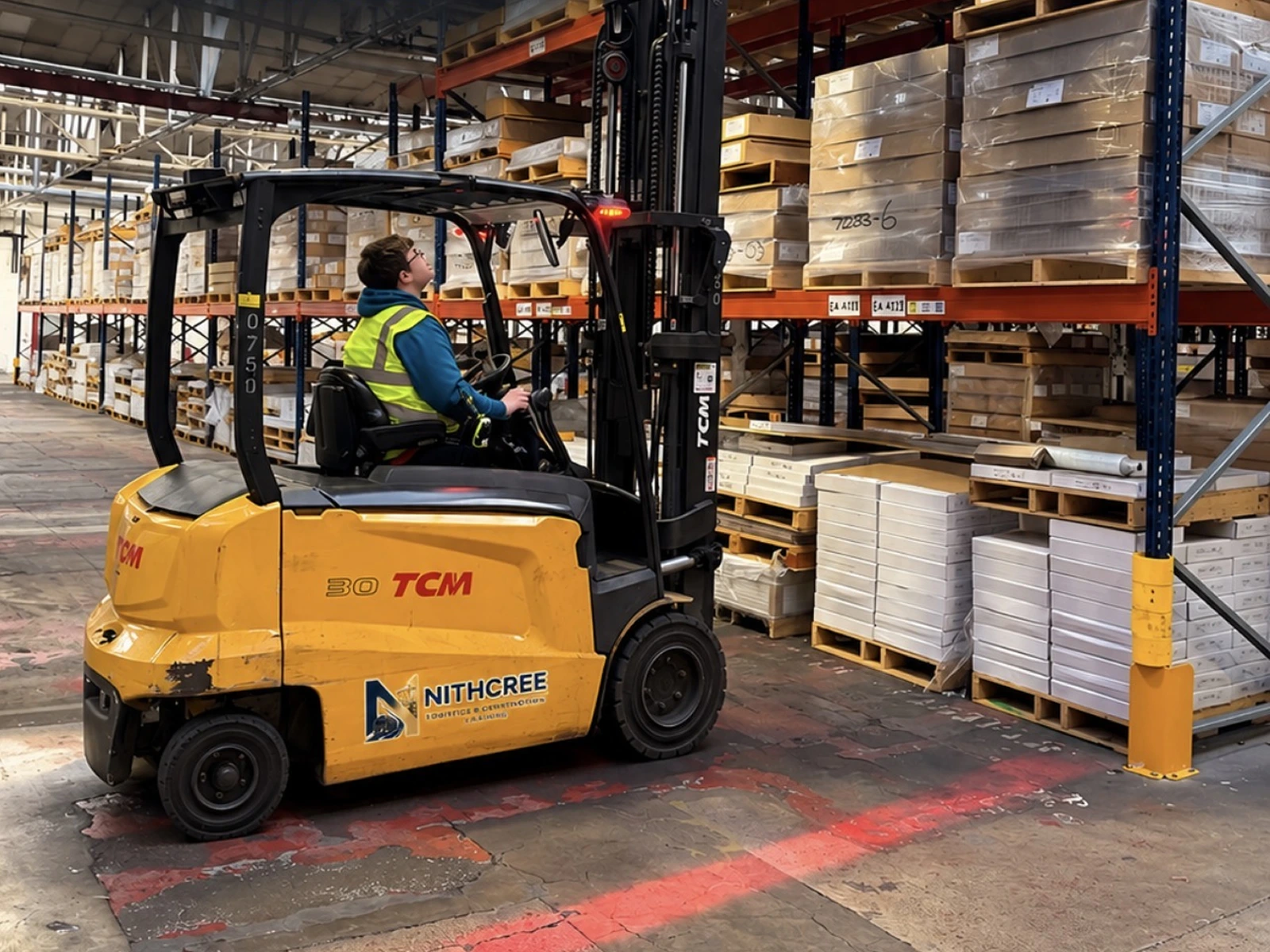
LOLER only covers the parts of a machine that lift. On a forklift that means the mast, chains, forks and carriage. The rest of the truck, including the brakes, steering and tyres, comes under PUWER, the Provision and Use of Work Equipment Regulations 1998. HSE’s guidance on lift trucks is clear that a thorough examination needs both.
A LOLER-only check can pass a truck with worn brakes or a faulty seat restraint. Booking LOLER testing and a PUWER inspection together means one visit, one set of paperwork and no gaps.
PUWER inspections are not just for lifting equipment. The regulations require an inspection when equipment is installed or reassembled at a new site, at regular intervals where it deteriorates with use, and after damage, major changes or a change in how it is used. The interval comes from your risk assessment and the manufacturer’s recommendations, and the result must be recorded and kept at least until the next inspection.
Book LOLER and PUWER together- LOLER: the lifting parts
- Mast, chains, forks, carriage, booms, hooks, lifting accessories and safe load indicators. Thorough examination every 6 or 12 months.
- PUWER: the rest of the machine
- Brakes, steering, tyres, lights and horn, guards, controls, seat restraints and operator presence systems, at intervals set by risk assessment.
- Between visits
- Daily pre-use checks by trained operators, also a PUWER duty. Our operator courses teach them.
- Servicing is not enough
- HSE is clear that routine servicing and preventive maintenance are not a thorough examination.
After the examination
Your report, and what happens if we find a defect
Every examination ends with a written report covering the details LOLER requires, including the date of the examination and when the next one is due. Keep it: you must be able to show it to an inspector or insurer on request.
If we find a defect that is, or could become, a danger to people, we tell you straight away and the equipment must not be used until it is put right. The law also requires the examiner to send a copy of that report to the enforcing authority. Less urgent defects are listed with a date by which they must be fixed.
PUWER inspections are recorded in the same way, so you have evidence for each machine. That record should travel with the equipment if it is hired out or moved to another business.
- Train the operators too. RTITB forklift, ALLMI lorry loader and NPORS telehandler courses.
- Plant. 13 NPORS plant courses, including MEWPs.
- Official guidance. HSE on LOLER thorough examinations, PUWER inspections and lift truck examinations.
Questions
LOLER and PUWER questions
What is LOLER testing?
LOLER is the Lifting Operations and Lifting Equipment Regulations 1998. LOLER testing, or a LOLER inspection, is the everyday name for the thorough examination the regulations require: a systematic, detailed check of lifting equipment and its safety-critical parts by a competent person, followed by a written report. About our LOLER testing.
How often does lifting equipment need a LOLER examination?
Every six months for equipment that lifts people, such as MEWPs, and for all lifting accessories such as chains and slings. Every 12 months for other lifting equipment, such as forklifts, telehandlers and lorry loaders. A competent person can set different intervals in a written examination scheme. Equipment also needs examining before first use, after installation at a new site, and after damage, major repairs or a long period out of use.
Does a LOLER examination include a load test?
Not always. The examiner decides what each examination needs. It usually involves visual and functional checks and measuring wear. Load testing or non-destructive testing is used where a risk assessment or the manufacturer calls for it, and most equipment does not need a routine overload test.
What happens if the examination finds a defect?
If a defect is, or could become, a danger to people, the examiner tells you straight away and the equipment must not be used until it is put right. A copy of that report must also go to the enforcing authority. Less serious defects are listed in the report with a date by which they must be fixed.
What is the difference between LOLER and PUWER?
PUWER (the Provision and Use of Work Equipment Regulations 1998) covers all work equipment: that it is suitable, maintained, inspected and used by trained people. LOLER adds extra duties for lifting equipment, including thorough examinations and planning lifts. On a forklift, LOLER covers the mast, chains and forks, while PUWER covers everything else, such as the brakes, steering and tyres.
Do I need a PUWER inspection as well as LOLER testing?
For most lifting machines, yes. A LOLER examination only covers the parts that lift, and HSE guidance says a lift truck thorough examination should cover the PUWER safety items too. We carry out PUWER inspections alongside LOLER testing, so the whole machine is checked in one visit. How LOLER and PUWER fit together.
How often does equipment need a PUWER inspection?
PUWER does not set a fixed interval. Equipment needs inspecting after installation or reassembly at a new site, at suitable intervals where it deteriorates with use, and after damage or major changes. The interval comes from your risk assessment and the manufacturer's recommendations, and harsh or outdoor use usually means more frequent inspections. Keep the record at least until the next inspection.
Ready when you are
Book a course or ask a question